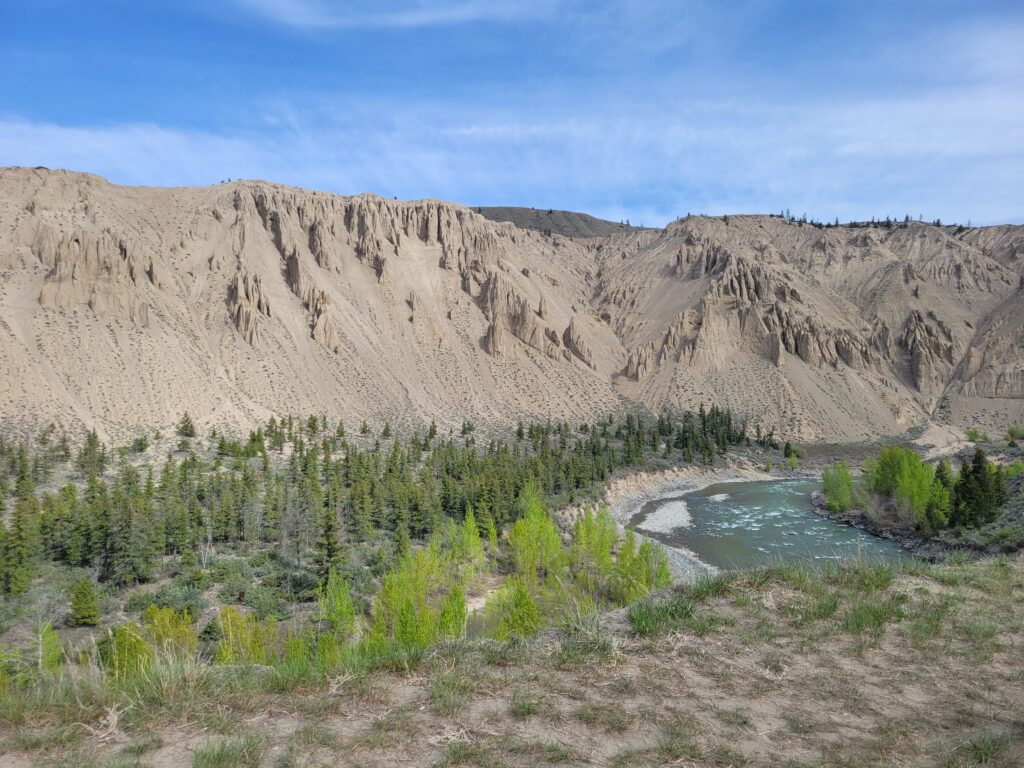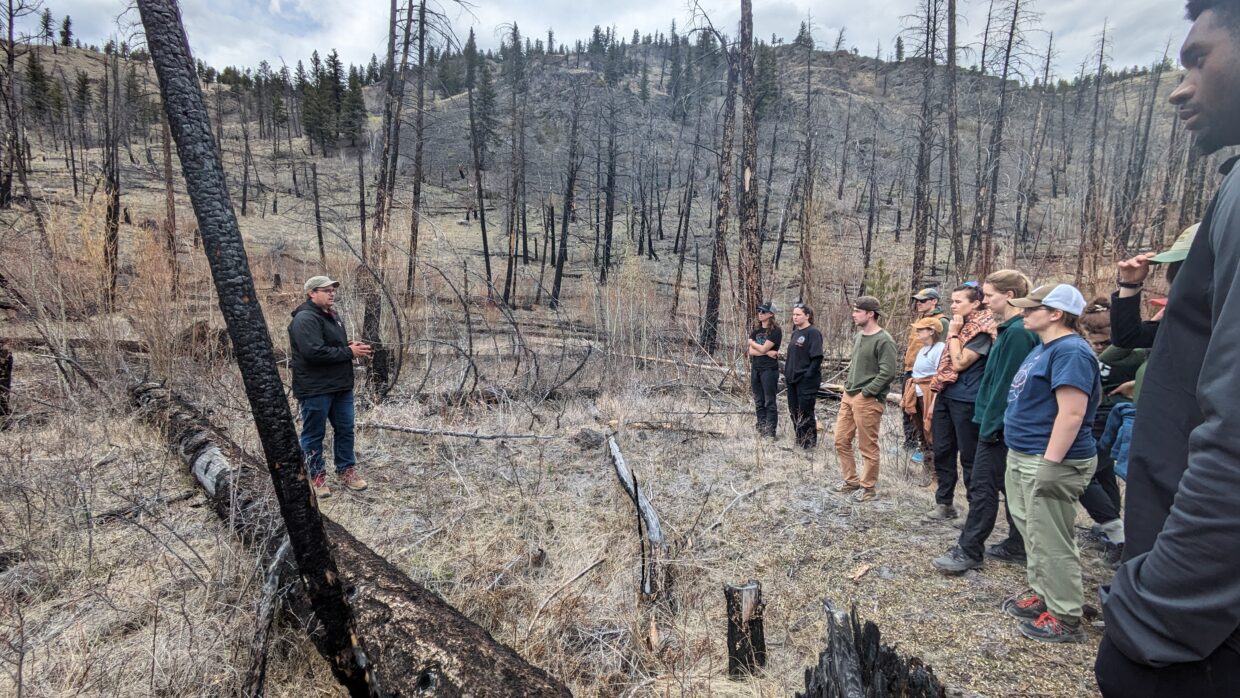
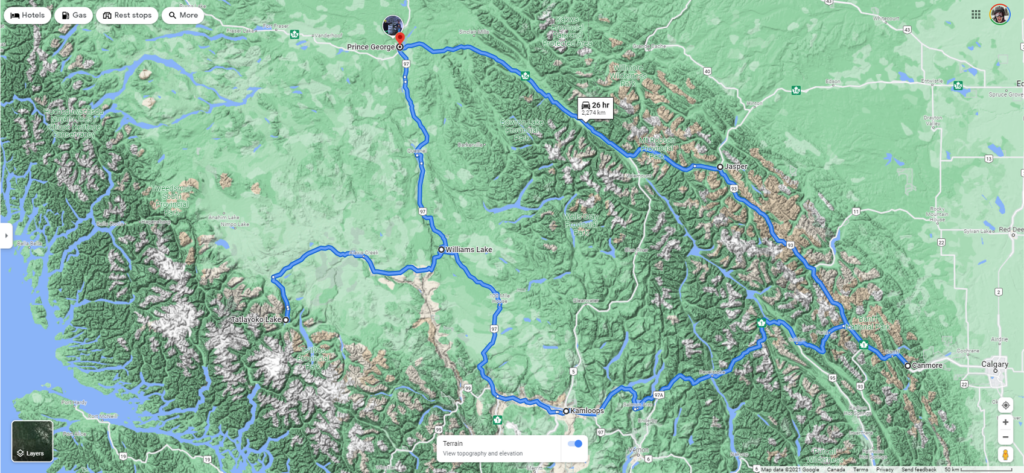
This three-week intensive course, co-taught with Dr. Adam Hawkins, combines in-class theory and preparations with a 13-day road trip through the mountains of western Canada. Students will gain invaluable experience with hands-on data collection, analysis, and concepts related to mountain glaciers and snowpacks, mountain landforms, remote sensing, and environmental change (mass movements, wildfires, glacier change). This course is aimed at upper-level students in the Faculty of Environment, but upper division students from all faculties are welcome.
Dates, Course Credits, and Field School Fees:
In-class theory and preparations will take place on the Prince George campus of UNBC between 27 April and 1 May. The field school will depart UNBC on the morning of May 3rd, and return the afternoon of May 15th.
Undergraduate students participating in the field school will get 6 credits for GEOG 333 (Field School) and GEOG 498 (Special Topics). Graduate students taking the course will take NRES 763 and NRES 698.
In addition to regular tuition fees (6 credits), students joining the field school must pay the $1500 field school fee, which covers all ground transportation (passenger vans and fuel), accomodations (tents, hostels, field school dorms, and hotels), and food (group prepared meals and an occasional restaurant).
How to join:
There are 15 spaces available for students, and these will be filled on a first-come, first-serve basis. After 1 December, spots will be offered to students from outside UNBC. To indicate your interest, please fill in your information in the form linked below:
Sign-up form (Deadline: 31 January 2026!!!)
Field School Information Sessions:
The first information session was held on November 5th at 4:40 pm in Room 10-4588. [slides]